1. Industry Context: Digital Expansion and Central Office Expansion Risks in Southeast Asia
Driven by the rapid rise of the digital economy across Southeast Asia, 5G network rollouts and Fiber-to-the-Home (FTTH) deployments are accelerating at an unprecedented pace. Telecom Central Offices (CO) in major Southeast Asian markets serve as critical hubs for high-density routing, optical transmission, and core switching, where data traffic continues to surge.
To support this rapid traffic growth, operators must regularly add active line cards and transmission racks, driving up total power demand on the existing DC power infrastructure. However, as the heart of regional communications, Central Offices demand continuous 24/7 power availability. Traditional power system capacity upgrades often involve complex cutovers or service downtime risks, where any unexpected power loss can cause widespread network outages and commercial loss. Consequently, achieving seamless DC power expansion without service interruption has become a vital requirement in Southeast Asia's network evolution.
2. Key Selection Criteria: Technical Logic of Hot-Swappable DC Power Architectures
To achieve risk-free, non-disruptive power scaling, telecom power engineering teams prioritize modular DC power systems built on hot-swappable (Hot Plug-in) rectifier architecture during technical evaluation:
-
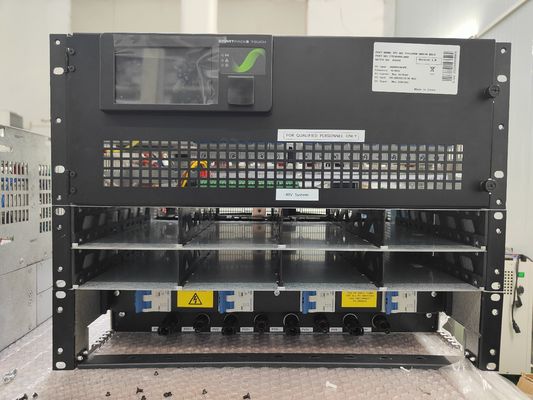
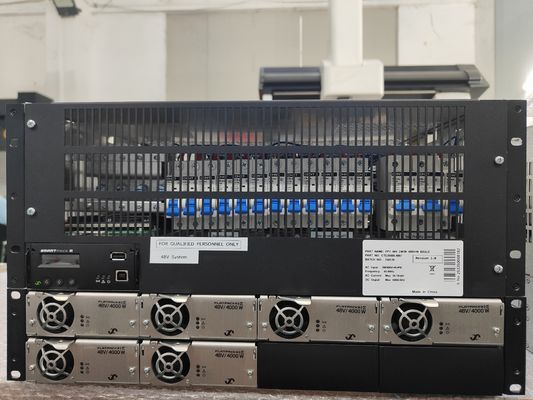
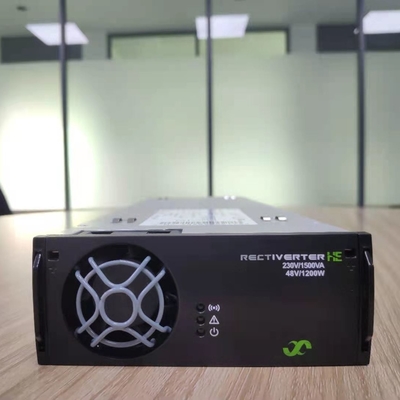
Live Plug-and-Play Integration: Carrier-grade hot-swappable rectifiers equipped with integrated digital controllers allow field technicians to insert new modules directly into live system racks. Upon insertion, the module automatically registers with the central controller, receives its ID, and downloads system set parameters—enabling live capacity expansion without manual intervention or AC/DC grid interruption.
-
Precise Active Current Sharing and Regulation: In parallel multi-module systems, dynamic voltage regulation and current sharing determine busbar stability. Selecting rectifiers with static voltage regulation within $\pm 0.5\%$ and active current sharing within $\pm 5\%$ ensures seamless load balancing between existing and newly added modules, eliminating voltage transients during insertion.
-
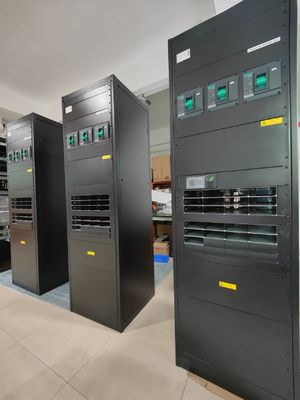
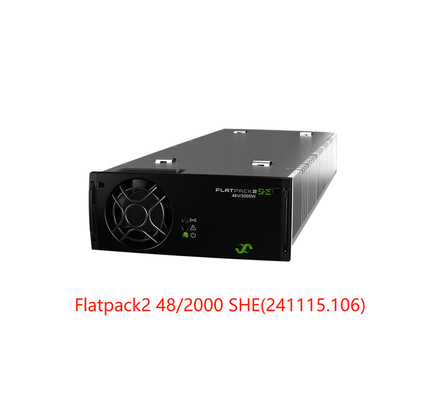
High Density and Scalable System Family: Central Office real estate is constrained. Utilizing 1U-high, high-density modular rectifiers (such as 48V/2000W units) enables flexible scaling from 2kW up to 192kW within standard 19-inch rack frames, maximizing U-space efficiency.
3. Operational Reliability: $N+1$ Redundancy and Reduced Lifecycle TCO
Beyond live scaling, modular hot-swappable architectures inherently provide robust $N+1$ or $N+2$ hardware redundancy for mission-critical loads.
If an individual rectifier fails, the central controller isolates the unit and triggers an alarm, while the remaining modules immediately assume the load without voltage disruption to active equipment. Field teams can perform tool-free live replacements in minutes, drastically reducing Mean Time to Repair (MTTR). Supported by a verified Mean Time Between Failures (MTBF) exceeding 350,000 hours (per Telcordia SR-332 standards), this architecture lowers long-term Total Cost of Ownership (TCO) across humid, grid-volatile environments in Southeast Asia.
4. Conclusion and Implementation Strategy
As Southeast Asian operators modernize their Central Office architectures, deploying 48V hot-swappable, plug-and-play modular rectifiers with high dynamic regulation offers a proven technical solution to expansion downtime risks. Procurement and planning teams should evaluate rectifiers based on live-swappable inrush protection, parallel load-sharing accuracy, and compliance with global safety and EMC standards to safeguard the regional digital infrastructure.


 Il tuo messaggio deve contenere da 20 a 3000 caratteri!